Partager l'article


One European regulation, three national paths. The European Union sets a common framework for type approval but leaves it to each country to authorize on-the-ground operations. Nothing illustrates this better than a direct comparison between Germany, Norway, and France: three countries, three speeds, three philosophies.
Germany is currently one of the most advanced countries on the subject, with a clear timeline: regular operations by 2026, the world's largest continuous operational zone by 2028, and full integration by 2030. This schedule is supported by a dedicated law on autonomous driving, in effect since 2021, which allows a vehicle to operate without a safety driver.
The German national strategy also makes public transport the priority, ahead of private cars, a choice driven by the projected shortage of bus drivers.
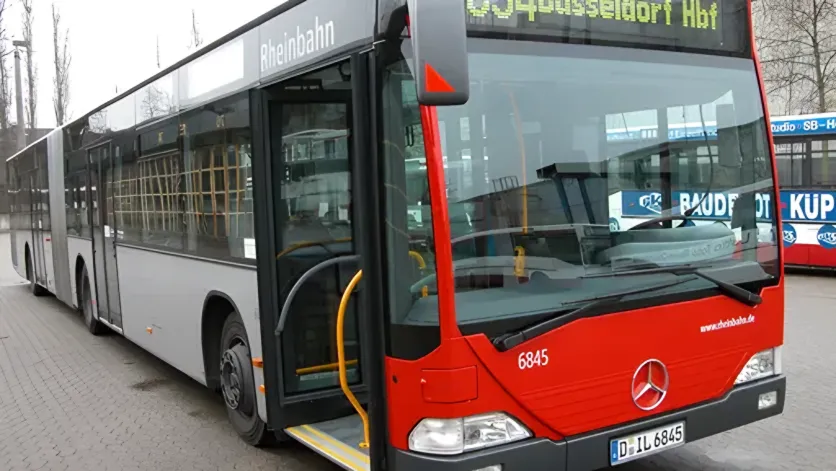
Two concrete examples: in Düsseldorf, an airport shuttle has been remotely operated since July 2026, thanks to legislation that legalizes teleoperation; in Munich, an automated electric bus from the brand MAN is scheduled to begin road testing as early as autumn 2026.
In April 2026, Norway reached an unprecedented milestone in Europe: the road authority authorized two operators Vy and Kolumbus to operate an autonomous bus on a regular route in Stavanger, with no supervisor on board. A level 4 bus, operating in mixed traffic at speeds of up to 40 km/h.
The project began in 2022 with a vehicle that was 85% autonomous, requiring regular human intervention. It has now reached 99% autonomy, with a single operator now able to supervise multiple buses remotely from a centralized control center.
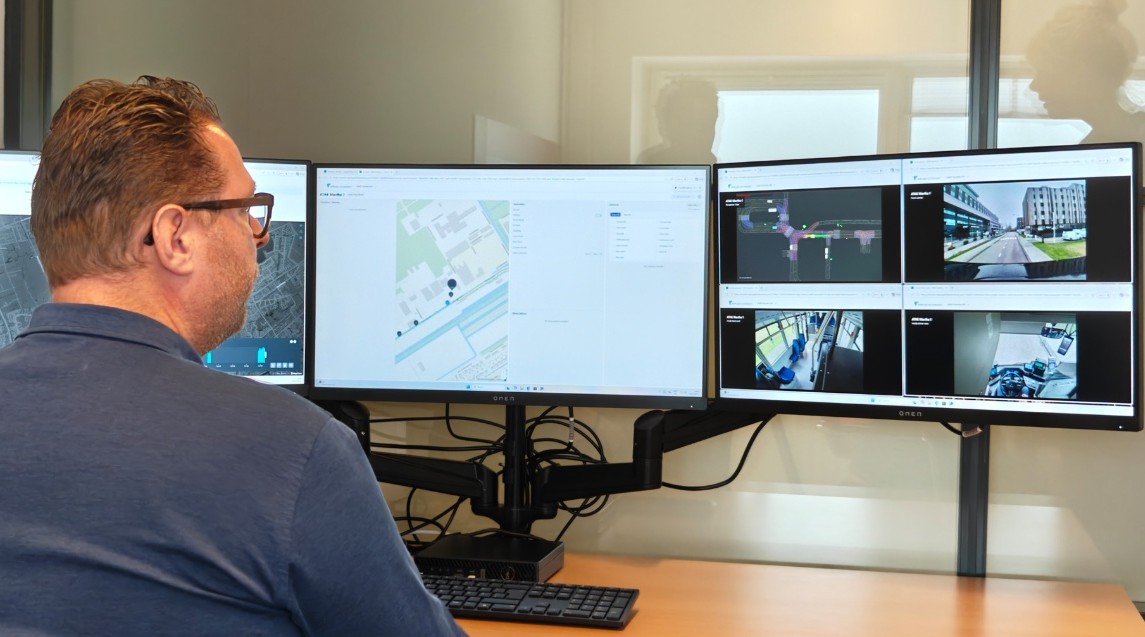
The economic argument here is significant: the European public transport sector is facing a shortage of over 105,000 bus drivers.
France is approaching the subject using a different method: regulate first, roll out later. Since 2019, the Mobility Orientation Law (LOM) has allowed highly automated shuttles to operate in specific use cases.
Two real-world examples provide a concrete idea of this cautious approach:

This comparison reveals a lesson for any public transport or DRT stakeholder:
This diversity of national paces raises a fundamental question, which the final article in this series puts into perspective: what if the priority isn't winning the robotaxi race, but ensuring we don't miss the opportunity to integrate with the public transport network?
No autonomous vehicle manufacturer yet dominates the European market, and the best-suited provider for Stavanger will not necessarily be the right one for Châteauroux or Munich.
This is precisely what is confirmed by the approach championed by Padam Autonomy : a technologically agnostic orchestration platform designed to integrate multiple vehicle brands and multiple providers. A transport authority or operator can thus test a vehicle, switch providers, or have multiple technologies coexist on the same network, without rebuilding its operating system at every stage.