Partager l'article



In August 2026, Hugo Bosc-Ducros, Director of Autonomous Vehicles at Padam Mobility, took part in a study trip to Beijing, Shenzhen, and Guangzhou alongside a European delegation of operators, city officials, and consultants. He shares his observations and how this trip confirms our strategy.
Hugo : We have five years of experience with autonomous vehicles, but that was with the previous generation. We needed to build expertise in the new generation. The Chinese ecosystem remains little known in Europe; we wanted to test these technologies for ourselves.
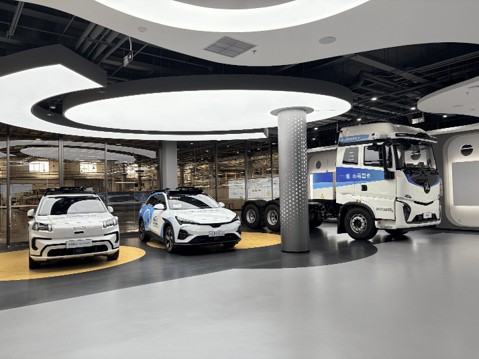
Hugo : The maturity. Four operators are already running driverless services in several cities, with five or six others following with the same permits. It is already a competitive market. The robotaxi from XPeng, a mass-market manufacturer, impressed me in heavy traffic. The first few minutes are spectacular, but after two minutes, it all feels very natural. After that, rides with a human driver feel too jerky.
The logistics sector also blew us away : Neolix autonomous delivery vehicles are everywhere. On this front, Europe is lagging behind, but there is a real opportunity.
Hugo : They maintain control over the entire process. In Guangzhou, a single control center already oversees several hundred robotaxis in real time. Cities fund these multi-million-euro centers, mandate a tracking device in every vehicle, and open up traffic zones gradually. Each operator must integrate into the city's existing system.
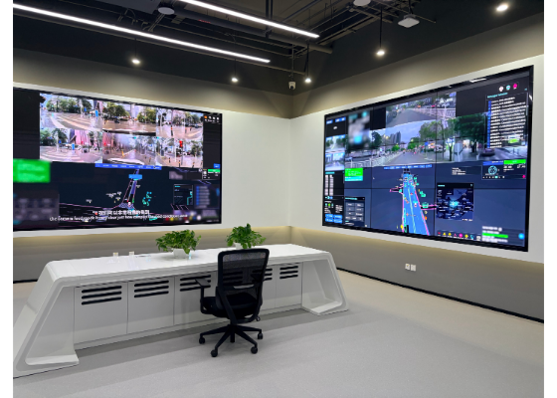
The paradox is this: with autonomous mobility, the city has more control over what happens on its streets and over trip data than it does with traditional taxis. In fact, the regulation of robotaxis is stricter than that of traditional taxis.
Hugo : Our conviction regarding orchestration. We advocate for a clear division of roles: the Demand-Responsive Transport (DRT) service, the vehicle, and the orchestration. China proves it: whoever orchestrates maintains control, regardless of the supplier. This model allows for the integration of American or Chinese technologies without getting locked in.
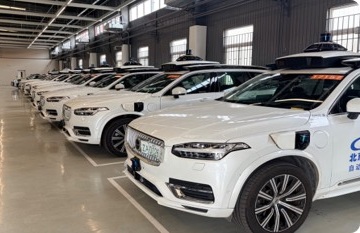
An authority can mature its operations today, then turn to a European player when one is ready. With the right model, you aren't locked in for life. It is also an opportunity for European manufacturers, who can partner with autonomous driving providers capable of equipping any vehicle.
Hugo : That is the big debate. The price of a trip will drop enough to compete with taxis, but certainly not enough to replace public transport: margins won't allow for it. Authorities will also be able to tax robotaxi operators. For suburban areas, autonomous shuttles and on-demand transport remain the right solution.
Hugo : Don't wait for the technology to be ready. The European model still needs to be built. There is a long road ahead : new roles, new processes, and a completely reimagined passenger experience. This requires multi-year planning. Supervision by cities is currently very inconsistent, and it needs to be created from scratch for autonomous mobility. We support authorities on this journey with a vendor-independent orchestration tool and assistance in building their governance.
Hugo : Public transport is in our DNA. We have been dealing with passenger transport challenges for 12 years : operations, the ecosystem, and driver relations. And we follow the technology closely. Autonomous transport is a natural extension of our business, and there is still everything to build regarding how these services will be operated.
With the orchestration tool Padam Autonomy, Padam Mobility puts this conviction into practice: a manufacturer-independent orchestration platform to help authorities and operators build their autonomous services, regardless of the vehicle used.