.png)
Partager l'article


Chaired by Sandra Witzel, founder of “Women in Mobility”, alongside Simon Fisher, General Manager at Thames Valley Bus, as well as Laetitia Roussel, Customer Success Team Lead, and Xuefei Wang, Transport Consulting Team Lead at Padam Mobility.
This deep dive webinar focused on the design of DRT services for two significant hubs - Heathrow Airport in the UK and the Ingolstadt Hospital in Germany.
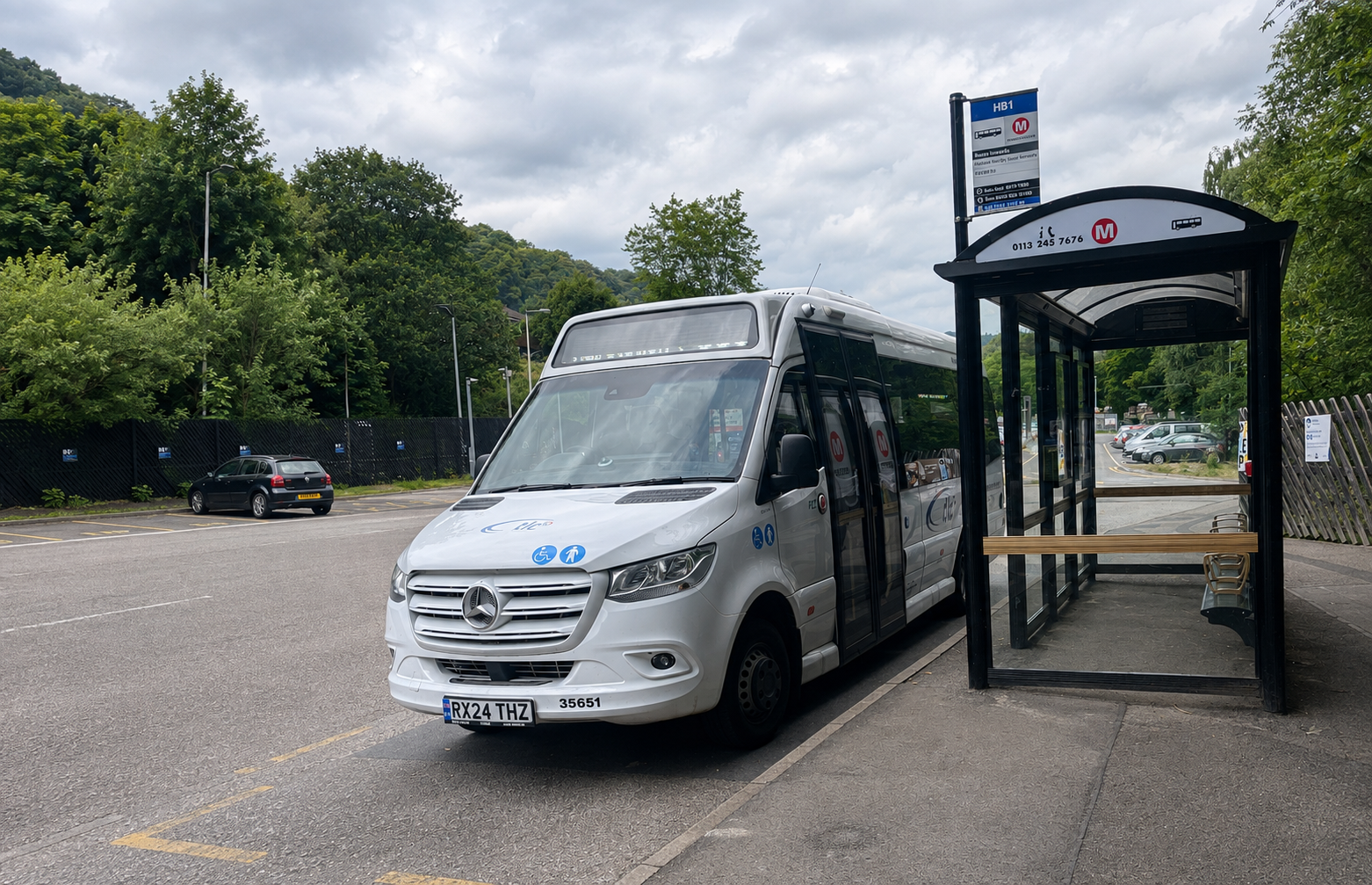
Go2Gate connects the Windsor suburb of Dedworth with Heathrow Airport. It was set up by Thames Valley Buses, which describes itself as "a traditional bus company" running 56 vehicles out of two depots in Bracknell and Slough.
Heathrow Airport tendered the contract to connect Dedworth and Heathrow in 2023, seeking proposals for both a fixed-line and a DRT version. Thames Valley Buses responded to both, and Heathrow chose the DRT option.
Go2Gate today:
The operator has found that its passenger profile differs from that of fixed-line buses: passengers tend to have higher expectations for punctuality and service, expectations the service is built to meet. As a result, operations focus heavily on punctuality.
UK legislation creates somefriction for the service, as the buses are effectively private hire vehicles sopeople can only board the vehicle they are booked on (even if there are earlier or later vehicles with capacity).
The DRT service serving the hospital in Ingolstadt was designed to fill gaps in transport provision, with service requirements co-designed by the hospital and VGI, the transport authority for the region.
VGI operates 12 DRT services across its area, but these typically serve rural areas where fixed lines aren't appropriate. The hospital service is different: it centres on a hospital within the city of Ingolstadt, which already has extensive public transport. The gap is one of timing, not coverage — the hospital operates 24/7, and many of its 3,000+ staff arrive and leave work outside the hours public transport runs. The hospital also treats over 90,000 patients a year, with visitors and family members adding further to the numbers travelling there.
Using anonymised data for originsand destinations, the team was able to design a service zone that connected the hospital with transport hubs (rail stations and bus stations). They set service hours for operations to enable journeys outside the times that fixed line services called at the hospital: Monday to Friday: 2:30 am to 5:30 am, Saturday: 4:30 am to 7:30 am and Sunday and public holidays: 4:30am - 10:30 pm. The sole vehicle was quickly busy, particularly on Sundays and public holiday - with an average occupancy of just under 3 people per vehicle hour.
Padam Mobility can plan and model different DRT scenarios, predict use patterns, and recommend vehicle numbers, service size and operating patterns — helping authorities meet their goals, offer the best service for their budget, and keep control of costs.
For more on these services and how Padam Mobility helps design, optimise and operate on-demand transport, watch the full webinar here.
During the webinar, panellistsanswered questions submitted live and in advance.
The commercial viability of theGo2Gate scheme was raised several times, specifically whether the service was breaking even or whether it could operate commercially (without Heathrow subsidy). Simon responded:
“Heathrow heavily subsidisethe service, even on current numbers, but per passenger has reduced of course…but of course they save on parking areas etc. But even if all passengers paidfull price it would still fall significantly short economically.”
“I think numbers would needto double again. Of course, Heathrow are happy to subsidise for all sorts ofreasons, but we would not be able to run this or even the A77 (fixed line)option commercially. The A77 would probably be worse, as I mentioned in another answer, there are many customers who travel with us because it's NOT like anormal bus.”
Laetitia was asked how long the Ingolstadt project took from planning to delivery:
"The PadamMobility element was 2-3 months but the hospital and transport authorities hadspent time gathering data and working on their collaboration so that theservice design to launch was straightforward. “
In addition, she was asked howticketing systems were integrated into the those used by ’normal’ bus services.
“For Germany the widespread use of the Germany ticket (a cheap monthly subscription for all local public transport) means ticketing is de facto integrated.”
There were also some interesting questions about service configuration and operation from bus size to ticket prices, which Simon answered.
“Just to be clear, does theGo2Gate service run on a fixed timetable?”
“Yes, though not directlypublished to customers. Regular customers recognise the departure times from Heathrow.”
“It sounds very Dedworth-specific so not easily replicated for other places in the area (let alone other airports)”
“It could easily be replicated to other areas. Dedworth was chosen as it didn't have direct linksby public transport, but also we operate the main service bus from Windsor tothe airport. The model needs reasonably good demand, Heathrow have talked aboutother locations around the airport.”
“How much does out of hours DRT service ie overnight, add to the cost of the service ie maintenance, driver pay etc?”
“We pay drivers about 8% moreafter 10pm and before 5am, so adds a bit, but not too significant. Our control room is open 24/7. Customer service is not supported between 11pm and 4am”
“What size of bus works best interms of passenger demand and operating cost?"
“The sprinters we use areideal. Occasionally a trip is full, but generally travel with 3-5 people. Thatsaid, to be commercial we would need a bigger vehicle. Some of the roads servedare not especially suitable for larger vehicles. Very occasionally we have tosubstitute a standard 9m bus which can cause problems and we have to askcustomers to walk a bit to meet the bus (we have 2 spare vehicles and 2 inservice).”
“How do the costs for using Go 2Gate for the passenger compare to taxi / private hire?”
“Great question. Our charge(decided by Heathrow) are £7, or £24 for 5. Taxi would be £40-60.”
The different passenger profileof Go2Gate also raised questions - both about the composition and usagepatterns.
“I would say its about 50/50 people travelling for flights and commuters. There is certainly evidence of some people driving to Dedworth andparking, which hasn’t caused a big issue but has potential to do so. But most people live in the area which the service serves. Public transport to the westof Heathrow is less good than to the east, there is no direct rail link.”
Go2Gate customers “are moredemanding, expectations are high (but generally met). Without doubt, many wouldnever dream of catching a traditional public bus but see this as more private.This does lead to a bit of "can you drop me here" or other requestswhich would be associated with a taxi or Uber.”
It was noted that elderly and disabled people often have difficulty in using apps, and the availability ofcall centre-based booking procedures questioned.
“Not for Go2Gate, though Padam offer this option. It was designed to be as hands off as possible for us as an operator. However, customers can book for another person, and whilst we don’t advertise it, if someone gets in touch for help we will make the booking for them.”
You can watch the full webinar here.