Partager l'article


In today’s increasingly connected cities, mobility solutions must adapt quickly to changing passenger needs. At the heart of this transformation are algorithms, sets of rules that enable computers to solve problems, make decisions, and optimize processes automatically. But how do these algorithms work in practice, and what makes Padam Mobility’s approach unique?
An algorithm is a step-by-step procedure that a computer follows to solve a problem or achieve a goal. In transport, algorithms manage routes, schedules, and bookings, helping operators deliver services that are faster, more reliable, and more cost-effective. They analyze constraints, process large volumes of data, and propose optimized solutions in real time.
- Richard Hamming, mathematician and computer scientist
This quote highlights that Padam Mobility's algorithms are not just about calculations, they generate actionable insights that improve passenger experience and operational efficiency.
Historically, demand-responsive transport (DRT) relied on manual processes. Reservations were taken by phone, and operators grouped trips with limited tools. This often led to inefficiencies, longer travel times, and suboptimal use of vehicles.
Padam Mobility has transformed DRT through advanced algorithms that automate trip allocation and continuously optimize services.
The algorithms focus on several operational parameters to improve efficiency:
These levers allow operators to offer a high-quality service while reducing travel distances, saving costs, and maintaining consistent schedules.
Padam Mobility uses two complementary types of algorithms: online and offline. Each serves a specific purpose in optimizing DRT operations.
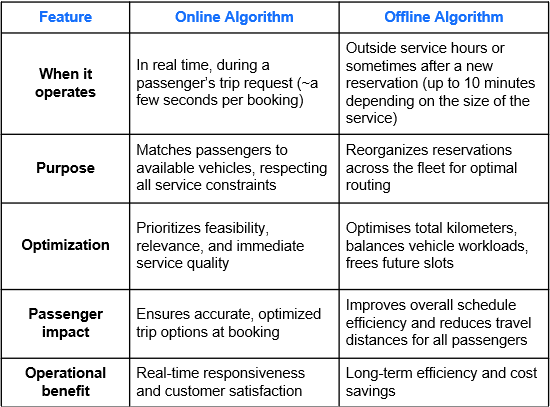
Online algorithm: When a passenger searches for a trip, the system filters available vehicles, respecting constraints like time windows, maximum detour rates, and vehicle capacity. The algorithm displays only the most relevant options, ensuring fast and accurate booking.

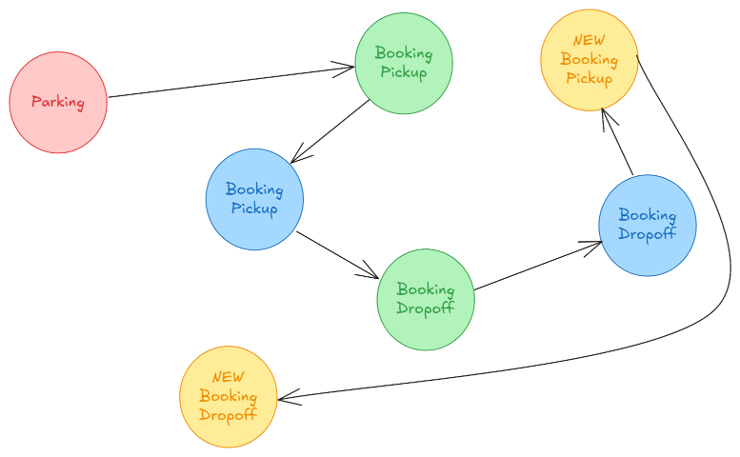
Offline algorithm: After bookings are made, the offline algorithm reorganizes reservations across the fleet. It reduces total kilometers traveled, balances workloads among vehicles, and optimizes routes for future services.
The offline algorithm also runs continuously, adjusting after each new reservation to maintain optimal routing. By respecting detour limits and time margins, the system ensures passengers are picked up and dropped off within promised windows, while the service remains efficient and predictable.
- Matthieu Lormeau, R&D team / Engineer & MaaS Project Manager at Padam Mobility
By combining online and offline algorithms, Padam Mobility delivers:
.png)