.png)
Partager l'article


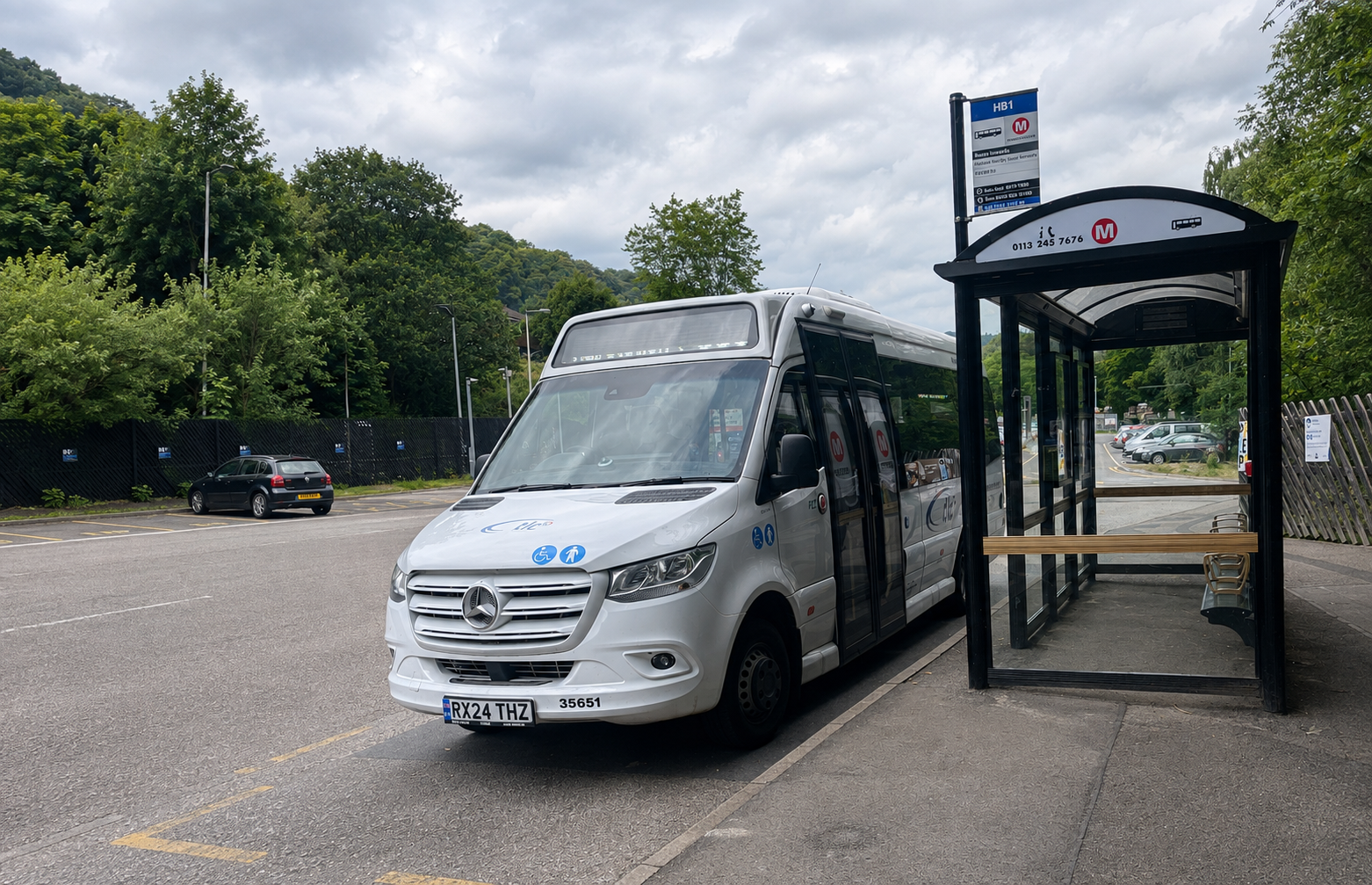
Beate Kubitz attended the “DRT Connecting People to Opportunities” end-of-project webinar. The project, led by researchers from the University of the West of England,Bristol, together with several partners, aimed to demonstrate how on-demand transport services can improve access for people living in areas with limited public transport. By doing so, the project sought to contribute to reducing place-based inequalities. In the following article, Beate shares her perspective on the matter.
The ‘DRT Connecting People to Opportunities’ end-of-project webinar was a very rich and informative session, summarising research into the users of DRT and calculating the value of the services in terms of social value (including several metrics).
Evaluation that’s not just ‘revenue minus costs’
Public transport business cases have suffered from over-emphasis on a tightly drawn investment case relying on the commercial case (revenue vs costs) and the transport case(travel time benefits, emissions, etc). This leads to many schemes failing the‘cost-benefit analysis’ despite clearly being valuable for communities and society because they help avoid costs associated with being isolated, from the direct impacts of being unable to access work to health impacts of loneliness or being unable to access appointments and services.
The ‘DRT Connecting People to Opportunities’ project looked at the broader impacts of DRT beyond traditional models – and offered insight into how they could be valued.
It specifically studied three of the Rural Mobility Fund DRT pilots to understand their impacts and how they could be calculated. For the study, both people who used the DRT services were surveyed, and also those who did not were surveyed and compared with people who lived outside the scheme areas.
Who uses DRT and why?
· A higher proportion of non-drivers: Whilst 4 out of 5 households in the areas studied had cars, only just under half the users of the DRT services had a car and a licence.
· A higher proportion of women, people of working age (18-59), of non-white ethnicity and in employment.
· The most common reason people stated for using DRT was that there were no other alternatives (37%).
· And if the DRT hadn’t existed 31%would miss an essential activity and 17% a non-essential activity.
The survey built up a picture of just how important DRT is to people who rely on it, withpaid work being the top reason for taking the bus and 14% of trips being to a General Practitioner or for a hospital appointment.
Putting numbers on not having transport
Whilst we know intuitively that lost jobs and missed appointments have both societal and personal costs, it’s been more difficult to evaluate how that impacts society and the economy as a whole.
The study took two approaches: quantifying the social value of the activities that were enabled by DRT and the ‘stated preference’ approach based on stated preferences for hypothetical scenarios involving DRT.
Researchers created a framework for their evaluation, which included metrics associated with the kinds of trips people were making. Values were put on trips and usage patterns from £4 benefit for visiting green space, or £39 in saved resources for not missing an NHS appointment, to £5,000 for two months of employment(avoiding the costs to society of unemployment).
Researchers were able to quantify the social value per trip based on these uses. For instance, the social value of The Robin was calculated at £17.76 peruse. This value was particularly high due to the large number of jobs The Robin supports.
The ‘contingent value’ attributed to DRT services based on survey responses from individuals in DRT and non-DRT services ranged from £6.5 to £7 per household.
Since the advent of DRT in rural areas, there have often been questions about ‘value for money’ – sometimes overlooking the reality that rural fixed bus networks are sparse, and services are highly subsidised and infrequent.
One of the features of this study is the light it sheds on the costs to communities of not being connected – people lose out on opportunities and are unable to use services, which has a cost to society as a whole.
Bus back= better
DRT may not be the whole answer, but it facilitates change and brings back transport to areas that have largely lost it. The participating authorities were keen to highlight how DRT had demonstrated that there is demand (and need) for bus services in rural areas – in some cases, leading to additional fixed routes enabling DRT resources to be redistributed to other, even less well-provisioned, areas. Where services have been funded through S106 payments by developers, the provision of DRT has stretched these payments further.
DRT is an enabler – for people and for communities.
Notes:
The ‘DRT Connecting People to Opportunities’ project was funded by the UKRI’s Creating Opportunities Evaluation Development Fund and carried out in parallel to the Rural Mobility Fund Evaluation (https://www.gov.uk/government/publications/rural-mobility-fund). The evaluation was carried out by teams at the University of the West of England and the University of Leeds.
You can find the full webinar and the slides here.