


Partager l'article


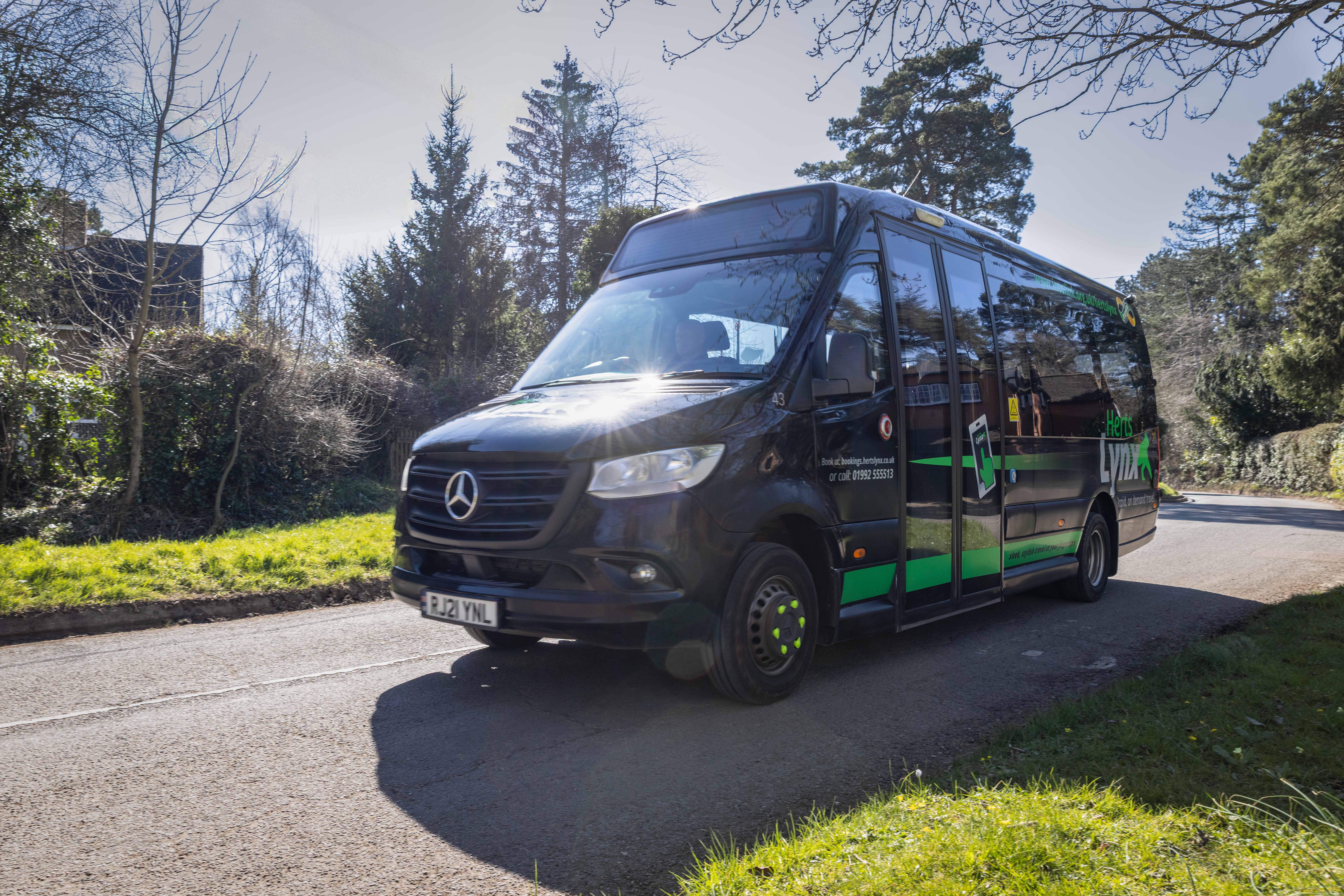
250,000 trips on the HertsLynx service is quite a milestone! It means thousands of different people have used it since the launch in 2021, and for all kinds of reasons. HertsLynx has also expanded from the area around Buntingford to cover Dacorum as well. To mark this milestone, Alice Missler, Passenger TransportManager at the Integrated Passenger Transport Unit of Transport for Hertfordshire, answers 5 questions about the service.
Q: Launching a new service in the midst of a pandemic must have been a bit nerve-wracking. What was the moment that convinced youthat you’d done the right thing?
A: “There was definitely some uncertainty about launching during COVID - travel patterns had completely changed, people were still cautious, and we had very little reliable data to base demand forecasts on.
One of the biggest early decisions we made was to scale the operation back before launch.We’d originally planned for a fleet of five vehicles, but given the unknowns,we took the pragmatic step to reduce that down to three. It felt like the right balance, still enough to deliver a meaningful service, but with less financial and operational risk while we tested how people would actually respond. We took extra safety precautions too, ensuring each vehicle was equipped with screens for the driver cab and air filtration devices.
I think the moment that really reassured me we’d done the right thing came quite early on once the service was live. Despite all the uncertainty, we started seeing real,consistent usage - people were not only trying the service but coming back touse it again. We were getting positive feedback from passengers who genuinely needed a more flexible transport option, particularly in rural areas where traditional services couldn’t always meet demand or were non-existent.
That combination of steady growth and customer feedback was the turning point. It showed that even in difficult circumstances, there was a clear need for what we were offering, and that by taking a cautious, measured approach with the fleet,we’d given ourselves the flexibility to adapt and grow the service sustainably.
Looking back, scaling down initially wasn’t about being cautious for the sake of it, itwas about making sure we launched something resilient. And that’s ultimately what allowed HertsLynx to establish itself and build confidence, both internally and with the communities we serve.”
Q: Who did you have in mind when you were designing HertsLynx?
A: “When we were designing HertsLynx, our primary focus was on people living in rural and semi-rural communities - particularly those who didn’t have easy access to frequent, traditional public transport.That included residents who might not drive, people needing access to employment, healthcare, education, and shopping, as well as those who weresocially isolated.
We also had in mind people whose journeys don’t fit neatly into fixed bus timetables orroutes. The aim was to create something flexible and demand-led, so it couldrespond to real travel needs rather than expecting passengers to work aroundthe network.
Ultimately,HertsLynx was designed to bridge gaps, both geographically and socially, and toprovide a practical, reliable alternative for communities that havehistorically been harder to serve.”
Q: As the service has evolved, can you tell us a bit about what kind of trips people make?
A: “As the service has matured, we’ve seen areally broad mix of journey types, which is exactly what we hoped for. There are regular commuters using it to connect to rail stations or key employmentsites, which shows it’s supporting the local economy.
We also seea high number of trips for everyday essentials, shopping, medical appointments,and accessing local services which highlights the role HertsLynx plays inmaintaining independence for many residents.
Social and leisure trips have also been important. Whether it’s visiting friends andfamily or attending community activities, the service has helped reduce isolation, particularly in areas where options were previously limited.
It’s that diversity of use that really demonstrates the value of a flexible,demand-responsive service - it adapts to people’s lives rather than the otherway around.”
Q: How does HertsLynx fit in with other forms of public transport in the area? Why did you expand beyond the original area?
A: “HertsLynx is designed to complement, not compete with, the existing public transport network. It works particularly well as a first-mile/last-mile solution, connecting people from more remote areas into main bus routes and rail services, making the wider network more accessible.
It also fills gaps where fixed-route services aren’t viable, either due to low demandor dispersed populations. By doing that, it strengthens the overall transportoffering rather than duplicating it.
The expansion beyond the original area was driven by both demand and success. As awareness grew and we saw strong uptake, it became clear there were similarunmet needs in neighbouring communities, and we had a vast number of requests from residents asking for the service to be expanded into Hertford and Ware. Expanding allowed us to extend those benefits - improving connectivity, supporting local economies, and ensuring more residents could access essential services. Bus Service Improvement Plan (BSIP) funding further enabled us to expand the offering to Friday and Saturday evenings, enabling better transport links for those who don’t work the typical 9 – 5 shift and also to support the night time economies; we also launched our second service in the West of the county thanks to BSIP. It was a natural progression, taking a modelthat was working well and scaling it carefully into another area where it couldmake a meaningful difference.”
Q: What’s the most surprising reason for travelling?
A: “One of the most surprising (and rewarding) things has been the variety of personal journeys people use the service for. While we expected commuting and essential trips, what stood out was how oftenpeople use HertsLynx for things that really enhance quality of life.
For example, we’ve seen people using it to attend social groups, get back intohobbies, or simply meet friends for a coffee - things that might seem small butcan have a big impact, especially for those who might otherwise feel isolated.
There have also been some very individual journeys such as people reconnecting with their communities after years of limited mobility options. Those kinds of tripsreally highlight that transport isn’t just about getting from A to B, it’sabout enabling independence and wellbeing.”

06
/
08
/
2026


