


Västtrafik's "Buss on demand": Improving Connectivity in Rural Areas in the Västra Götaland Region
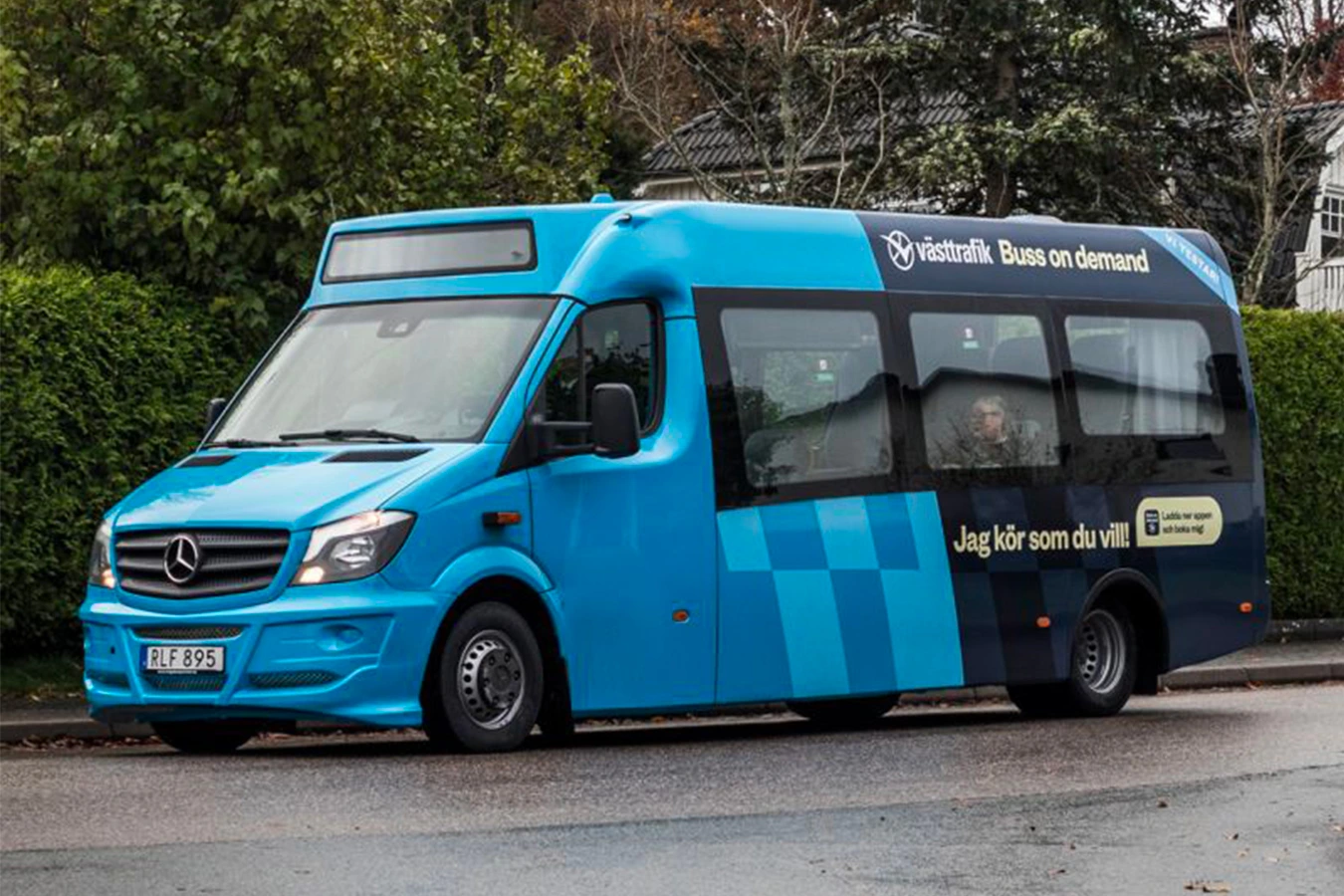
How can regional transport move beyond fixed schedules to become a truly indispensable public service? This case study examines the strategic rollout of Demand-Responsive Transport (DRT) in Ulricehamn and the Mark region, marking a significant shift in transportation management. By prioritising seamless integration and user experience, the project aims to bridge the gap between rural connectivity and environmental goals. The study explores how a flexible, demand-led model can reduce CO² emissions, decrease private vehicle reliance, and provide a sustainable, "always-on" network for local residents.
Download
The document
Padam Mobility
As a key player in shared mobility, Padam Mobility meets the objectives of rebalancing the transport offer in sparsely populated areas and allows all users to move around with more freedom. The company designs and develops dynamic and intelligent Demand-Responsive Transport solutions (DRT and Paratransit) based on artificial intelligence:

Users book their rides in real time or in advance via an application, a website or a call centre.

Drivers follow the evolution of their itinerary which is optimised according to bookings.

Thanks to a dedicated management interface, transport operators can supervise operations and collect the data needed to continuously improve the service.


